
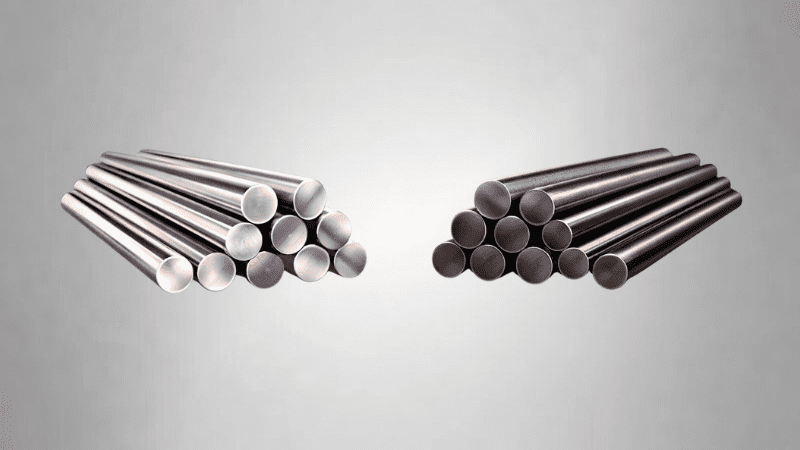
Difference Between Stainless Steel Bars and Alloy Steel Bars
In modern engineering and manufacturing, selecting the right material is essential for ensuring performance, durability, and safety. Among the most widely used materials in industrial applications are stainless steel bars and alloy steel bars.
Both materials offer excellent strength and mechanical properties, but they differ significantly in chemical composition, corrosion resistance, and application areas. Understanding these differences helps engineers, manufacturers, and procurement professionals choose the most suitable material for their specific requirements.
What Are Stainless Steel Bars?
Stainless steel bars are steel products that contain a minimum of around 10.5% chromium, which provides excellent resistance to corrosion and oxidation.
The presence of chromium forms a protective oxide layer on the surface of the metal, preventing rust and corrosion in many environments.
Key Properties
- High corrosion resistance
- Good strength and durability
- Excellent aesthetic finish
- Hygienic and easy to clean
- Good resistance to chemicals and moisture
Common Types of Stainless Steel Bars
- Austenitic stainless steel (304, 316)
- Martensitic stainless steel
- Ferritic stainless steel
- Precipitation hardening grades like 17-4PH
Applications
Stainless steel bars are widely used in:
- Food processing equipment
- Pharmaceutical machinery
- Marine equipment
- Chemical processing plants
- Architectural structures
Their corrosion resistance makes them ideal for environments exposed to moisture, chemicals, or high humidity.
What Are Alloy Steel Bars?
Alloy steel bars are steel products that contain additional alloying elements such as chromium, molybdenum, nickel, manganese, or vanadium.
These elements enhance specific properties of the steel, such as strength, hardness, wear resistance, and heat resistance.
Key Properties
- High strength and toughness
- Improved fatigue resistance
- Better performance under high stress
- Enhanced wear resistance
- Good performance at high temperatures
Common Alloy Steel Grades
- Alloy 4130
- Alloy 4140
- Nickel alloy steels
- Chromium-molybdenum steels
Applications
- Automotive components
- Aerospace parts
- Oil and gas equipment
- Heavy machinery
- Power generation equipment
Key Differences Between Stainless Steel Bars and Alloy Steel Bars
Corrosion Resistance
Stainless steel bars provide excellent corrosion resistance due to their chromium content, while alloy steel bars generally require protective coatings to resist corrosion.
Strength
Alloy steel bars typically offer higher strength and mechanical performance compared to standard stainless steels.
Composition
Stainless steel contains chromium as a primary element for corrosion resistance, whereas alloy steels contain a variety of alloying elements designed to enhance strength and durability.
Applications
Stainless steel is commonly used in industries where corrosion resistance is important, while alloy steel is preferred for heavy-duty structural and mechanical applications.
Where We Come In
At Maniar And Company (India), we supply a wide range of stainless steel and alloy steel bars designed to meet demanding industrial requirements.
Our material portfolio includes:
- Stainless steel round bars
- PH grade bars such as 17-4PH
- Alloy steel bars including 4130 and 4140
- Nickel alloy bars
Leave A Comment